Paani Ki Kahaani

Paani ki kahaani
Paani ki Kahaani is a web museum sharing the stories of women from Sanklitnagar, Ahmedabad, about their everyday battle for access to WASH infrastructure.
About Sanklitnagar
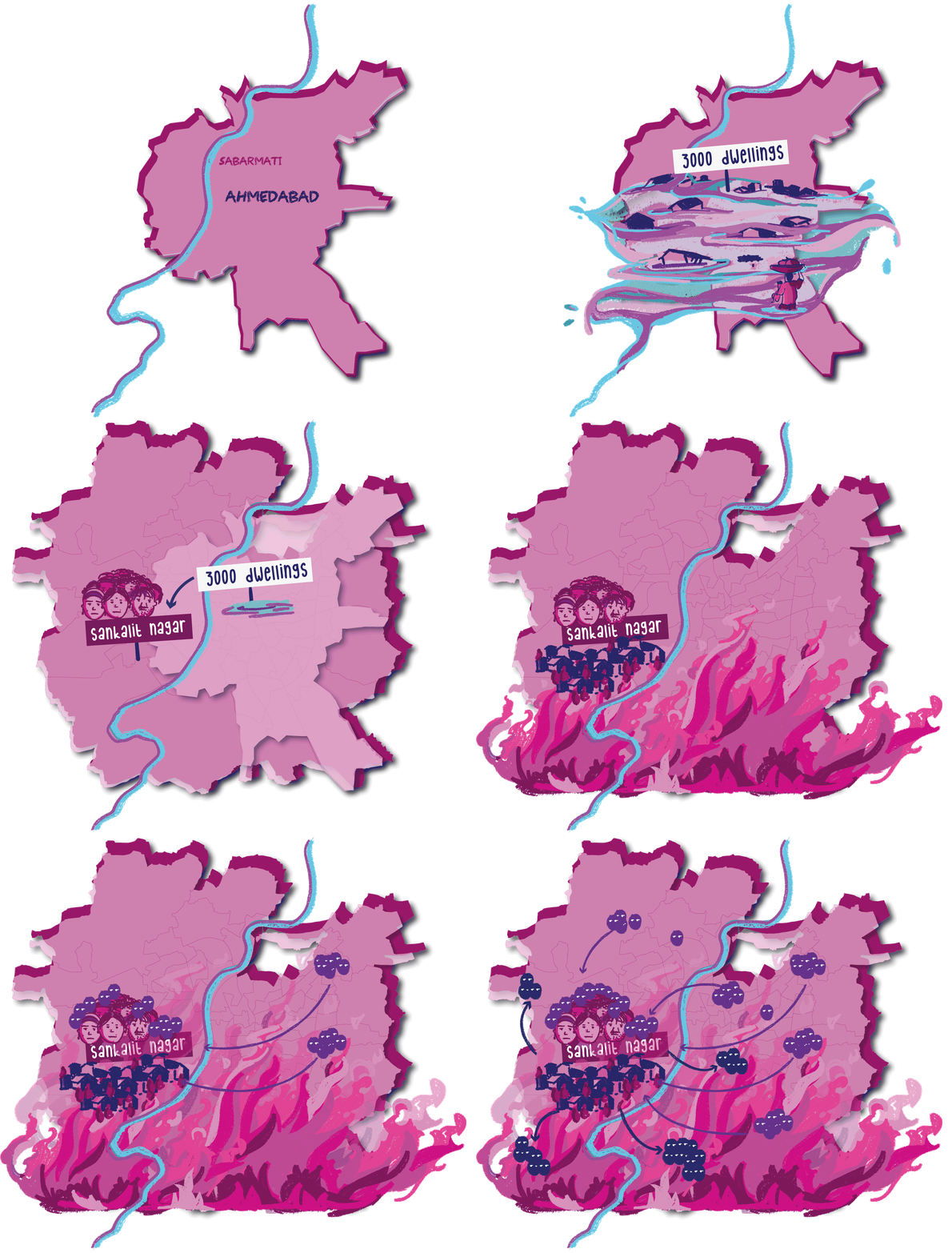
In August 1973, floods destroyed more than 3000 dwellings in Ahmedabad. These families were then resettled under a housing program in the south west of the city named Sanklitnagar. It was the state’s first large scale rehabilitation program. At the time, it lay outside of the Ahmedabad Municipal Corporation’s borders.
Over the next few decades, communal riots led to many Muslim families resettling in and around Sanklitnagar while Hindu families moved out making it a safe haven for riot victims of low income Muslim families who had failed to find housing elsewhere. As communal politics intensified, Sankalitnagar became a part of a sharply segregated city.
As Sanklitnagar was situated outside the limits of the then AMC boundary, it lacked basic infrastructure like street lights, water supply, sanitation, education and healthcare facilities. Its population continued to grow, causing a greater strain on its already fragile infrastructure.
Watch what people from Sanklitnagar have to say about the WASH issues in the area!

Stories of women and water
Each story is a window to the reality of the women of Sanklitnagar and their everyday battle to gain access to clean water.

Click on the image to know their story!

Farzana's Story

Fatima's Story

Saira's Story

Kausher Ali Saiyed
Local Social Activist
I can guarantee that at least 70% of muslim households in Maktampura/Juhapura do not have clean drinking water. The water that comes from borewells etc also is not fit for consumption - it causes kidney stone issues and other problems. This severely affects the quality of life as the poor do not have the means to pay for the treatments

Nilofer Sheikh
Resident of B ward, front lane
Times are such that 2 people have to earn. And I think that women have to be independent. To meet her needs, if she is independent, it is good.
Even though women earn, I do not see a change in responsibility for housework. It is like it has always been. Women’s work has increased, not decreased now.
Curated by team Water Tales

Khushali Haji

Prachi Adesara

Shourya Dubey
Support the community
Follow MAHILA PATCHWORK
Follow Muskan Collective